
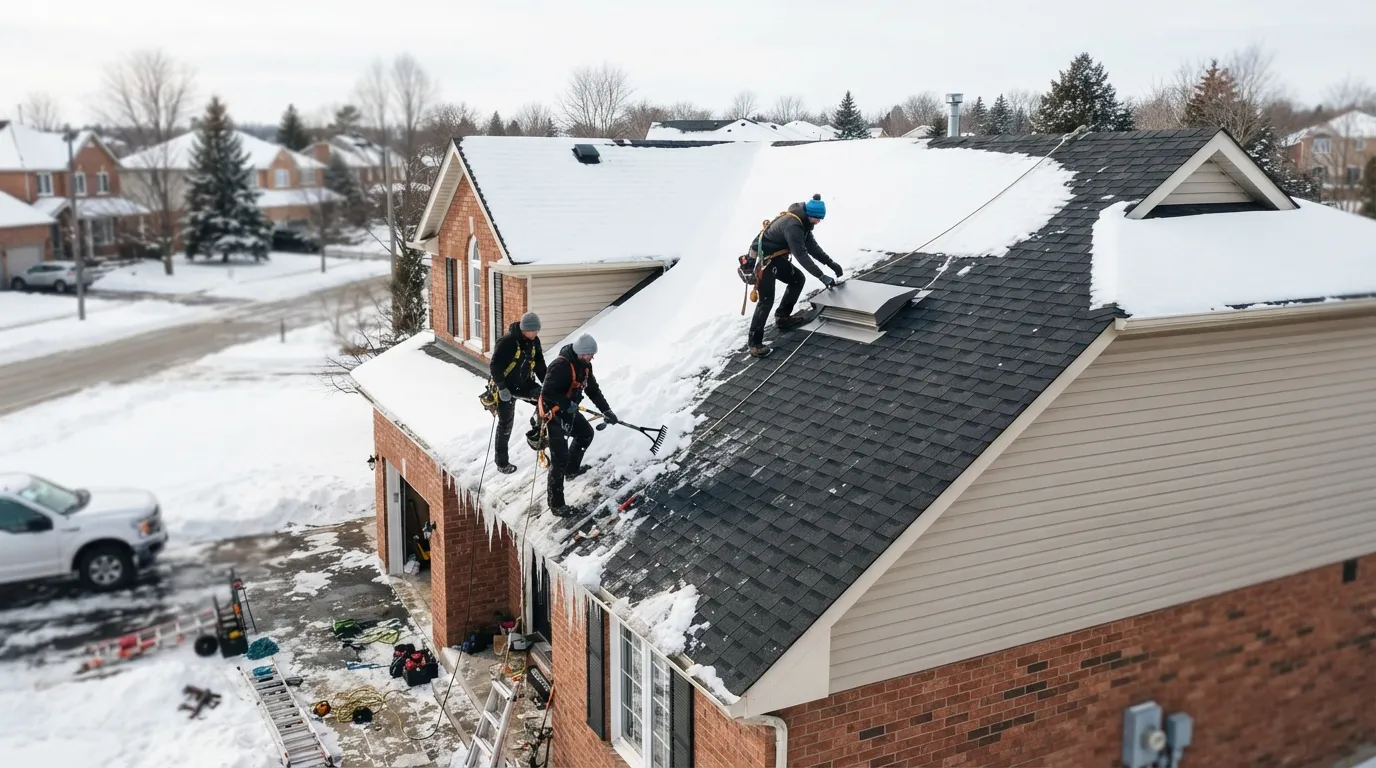
Resolving ice dams and improving attic ventilation in Whitchurch-Stouffville
Targeted repair and performance upgrades to stop recurring ice dams and protect the roof assembly through harsh York Region winters.
- 1
Diagnostic survey and moisture mapping
We began with a full exterior and attic inspection, using a moisture meter and thermal imaging to map wet sheathing and cold spots. Photos and a written condition report were prepared for the homeowner, documenting problem locations and proposed interventions.
- 2
Safe removal of ice‑dammed and compromised roofing
Where ice dams had forced water under the roofing, we removed shingles back to dry, sound substrate and carefully cut away damaged felt and sheathing. Damaged fascia and drip edge were replaced with continuous 6061‑T6 aluminium drip edge and ventilated aluminium fascia where required to reestablish a clean eave detail.
- 3
Restore deck, underlayment and high‑performance flashing
Sheathing that failed inspection was replaced with 19 mm plywood; the deck received a layer of self‑adhesive waterproof membrane (ice‑and‑water shield) across eaves and into valleys. We installed a synthetic high‑temperature underlayment (e.g. SBS‑modified) and used lead‑free metal flashings at chimneys and roof penetrations, seated over step flashings per good practice.
- 4
Rebalance attic thermal control and ventilation
To prevent recurrence we reconfigured intake and exhaust: continuous soffit baffles were installed to open the eave vent path, and we added a continuous ridge vent sized to provide a minimum 1:300 net free area when combined with soffit intake. Existing insulation was inspected and selectively augmented with closed‑cell spray foam at problematic attic knee walls and air‑sealing with high‑performance gaskets and low‑expansion spray foam around penetrations.
- 5
Finish with durable roofing material and quality assurance
We reinstalled architectural‑grade laminated asphalt shingles, mechanically fastened per manufacturer specs, and sealed all fasteners with neoprene washers where appropriate. A final blower‑door assisted smoke test and attic temperature assessment confirmed balanced airflow; we photographed work and provided the homeowner with a maintenance and warranty packet.
Frequently Asked Questions
How long does an ice‑dam remediation and ventilation upgrade typically take?
Most projects of this scope take between two and five days depending on roof complexity and the extent of sheathing replacement. Weather windows in late spring to early fall are most reliable for exterior work in Whitchurch‑Stouffville and surrounding York Region towns such as Markham and Newmarket.
How disruptive is the work to daily life inside the house?
We focus on minimal intrusion: most attic work is done through the hatch with drop‑cloth protection and containment. Some interior access may be needed for attic air‑sealing, but there is no heavy demolition of finished rooms for a correctly executed ventilation upgrade.
How do I know if my house needs this kind of intervention?
Repeated ice dams, interior ceiling stains after storms, persistent attic moisture or visible mould growth are strong indicators. A professional diagnostic — including moisture testing and infrared imaging — will confirm whether ventilation rebalancing, insulation fixes or roof repairs are required.
Will this comply with local code and insurance expectations?
Our proposed repairs follow Ontario Building Code principles for ventilation and thermal performance and meet standard best practices used by local insurers. We document the condition and scope of work, which helps owners with any future insurance reviews or resale disclosures.
Protect your Whitchurch‑Stouffville roof before the next freeze‑thaw season
Email us for a practical inspection and a clear, documented plan tailored to York Region homes.
Get a Free Quote