
A whole-home eavestrough and downspout renewal in Halton Hills
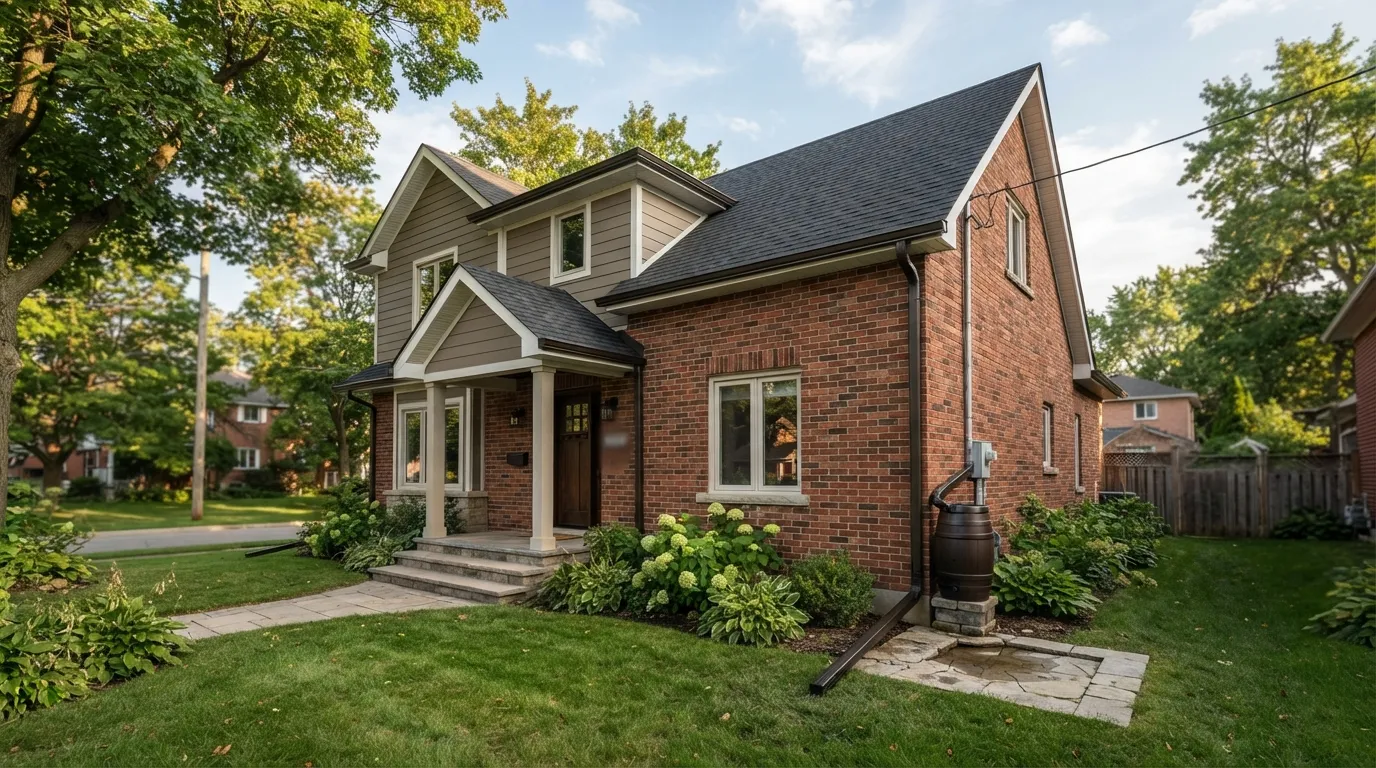
Replacing failing gutters to protect a two-storey Halton Hills home with long-term, code-conscious water management.
- 1
Assessment and specifications
Our crew conducted a full-site inspection and measured every run, noting roof pitch and downspout locations. We specified 5-inch and 6-inch K-style aluminium eavestroughs with 0.027" extruded thickness in areas with heavy runoff, matching half-round profiles where the architecture required a softer look.
- 2
Material selection and preparation
We chose mill-finish aluminium for its corrosion resistance, finished with a baked-on coil coating in a colour selected to complement the trim. All accessories were stainless-steel fasteners, hidden hanger systems where possible, and high-capacity 3x4" and 4x5" rectangular downspouts for roof areas that drain large surfaces.
- 3
Safe removal and substrate work
Troughs and downspouts were removed in sections to protect eaves and landscaping; we used scaffold and roof harness systems to maintain safe access to the two-storey elevations. Rotten fascia were replaced with pressure-treated, primed boards and a breathable flashing membrane was installed behind the new fascia to control moisture migration.
- 4
Precision installation and fall
We installed continuous runs where possible, with mitred corners sealed using urethane sealant compatible with aluminium. Gutters were set to a minimum fall of 1/16" to 1/8" per foot toward downspouts, and hidden hangers were spaced at maximum 24" centres per manufacturer guidance to resist snow loads typical of Halton Hills winters.
- 5
Downspouts, discharge and code considerations
Downspouts were positioned to discharge to splash pads or re-grade areas above foundation drains, avoiding direct discharge within 1.5 metres of the foundation where local best practice recommends. Where roof leader capacity exceeded a single downspout, we installed secondary leaders and downspout extensions to manage peak melt and heavy rain events in accordance with municipal drainage expectations.
Frequently Asked Questions
How long does a full eavestrough and downspout replacement take?
Typical turnaround for a two-storey house in Halton Hills is two to four days, depending on scope, roof complexity and access. Weather windows matter—we plan around rain and freeze events to avoid trapped water behind new installations.
How disruptive will the work be?
We stage equipment carefully to protect landscaping and maintain safe pedestrian access; most of the noise is intermittent and tied to removal and metal cutting. Because we coordinate scaffold placement and perform sectioned removal, most homeowners find disruption minimal over the short installation period.
When is a full replacement necessary instead of repair?
Full replacement is recommended when multiple runs sag, seams split, fascias are rotten or when downspout capacity and placement no longer meet modern drainage needs. If more than two sections in multiple locations show structural failure, a comprehensive approach yields better long-term value.
Ready to improve your home’s drainage in Halton Hills?
We document capacity, placement and finish choices and work with local requirements across Halton County and nearby Georgetown and Acton.
Get a Free Quote