
Cedar-to-Architectural Shingle Conversion in Newmarket
Replacing aging cedar shakes with an engineered architectural shingle system to improve durability, fire performance and weather resilience.
- 1
Initial inspection and scope development
We performed a full roof survey from scaffolding, inspecting sheathing, flashings, chimney boots and attic ventilation. Moisture meter readings and a brief attic check confirmed the extent of decking repairs and told us whether existing insulation or soffit vents needed adjustment to meet performance objectives.
- 2
Safe removal and disposal of existing cedar
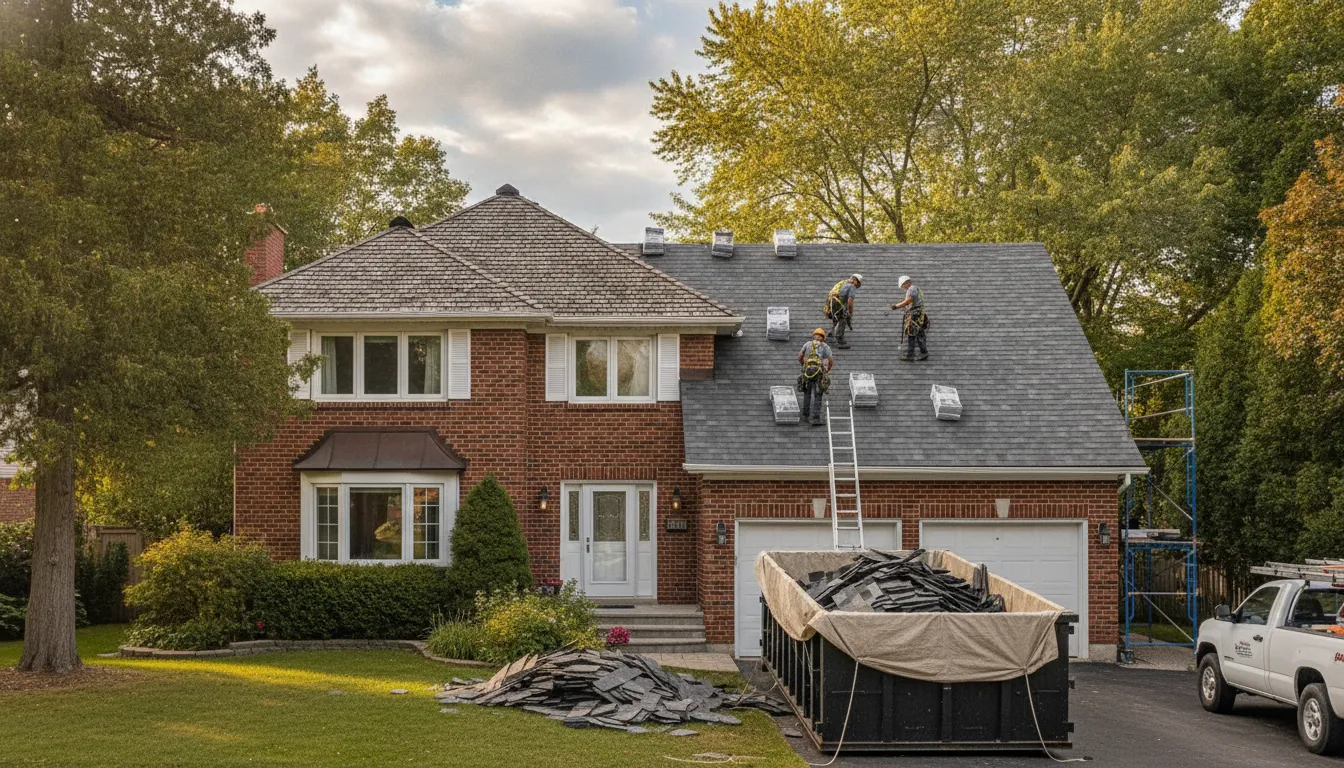
Cedar shakes were stripped carefully to avoid damaging underlying eaves and trim; rotten sheathing pieces were removed and replaced with exterior-grade plywood or OSB to match structural needs. We staged debris removal to protect the lawn and used a covered dumpster placed to minimise disruption on the narrow residential street.
- 3
Upgrade to performance-driven roof assembly
We installed a modern underlayment system: a self-adhering ice and water shield across eaves and vulnerable valleys, followed by a synthetic breathable underlayment over the field. Solid cedar conversion included a 1x4 spaced vented batten where required and a nail base to provide a secure substrate for the architectural shingles.
- 4
Select and install architectural shingles and flashings
We specified a laminated architectural shingle — typically an SBS-modified or high-wind rated laminate from manufacturers such as GAF or IKO — in a colour chosen to complement trim. Flashings were replaced with continuous 26‑gauge aluminum at valleys and step flashings with corrosion-resistant kick-out pieces at siding transitions; all roof-to-vent and chimney flashings were sealed with compatible elastomeric roof cement where required.
- 5
Ventilation, finishing touches and quality checks
To prevent future ice dam and moisture issues we balanced intake soffit vents with ridge ventilation, upgrading to a dedicated ridge cap system. Final steps included torque‑checked fasteners, a thorough cleanup, and a walk-through to review warranty materials and maintenance notes with the homeowners.
Frequently Asked Questions
How long does a conversion like this take?
Most single-family homes in Newmarket take four to seven working days depending on roof complexity and the extent of decking repairs. Weather windows in the America/Toronto timezone and seasonal demand can shift schedules, so we plan around forecasts to avoid mid‑job exposure.
How disruptive is the work to daily life?
We stage work to limit disruption: deliveries and dumpsters are timed, and we protect landscaping and eavestroughs. While roofing generates noise during removal and installation, most homeowners continue living at the property without having to vacate.
When is replacing cedar with shingles the right choice?
Conversion is recommended when shakes show widespread splitting, significant rot, poor attic ventilation, or when homeowners prioritise lower maintenance and higher fire or wind performance. It’s also a practical choice where insurance or local code considerations favour non-wood coverings.
Ready to upgrade your Newmarket roof with thoughtful craftsmanship?
We’ll assess your cedar roof and outline a conversion plan that balances aesthetics, code compliance and long-term performance.
Get a Free Quote