
Attic Ventilation: The Hidden Key to a Long-Lasting Roof
Learn how airflow, insulation, and simple fixes prevent damage and extend roof life in Toronto homes.
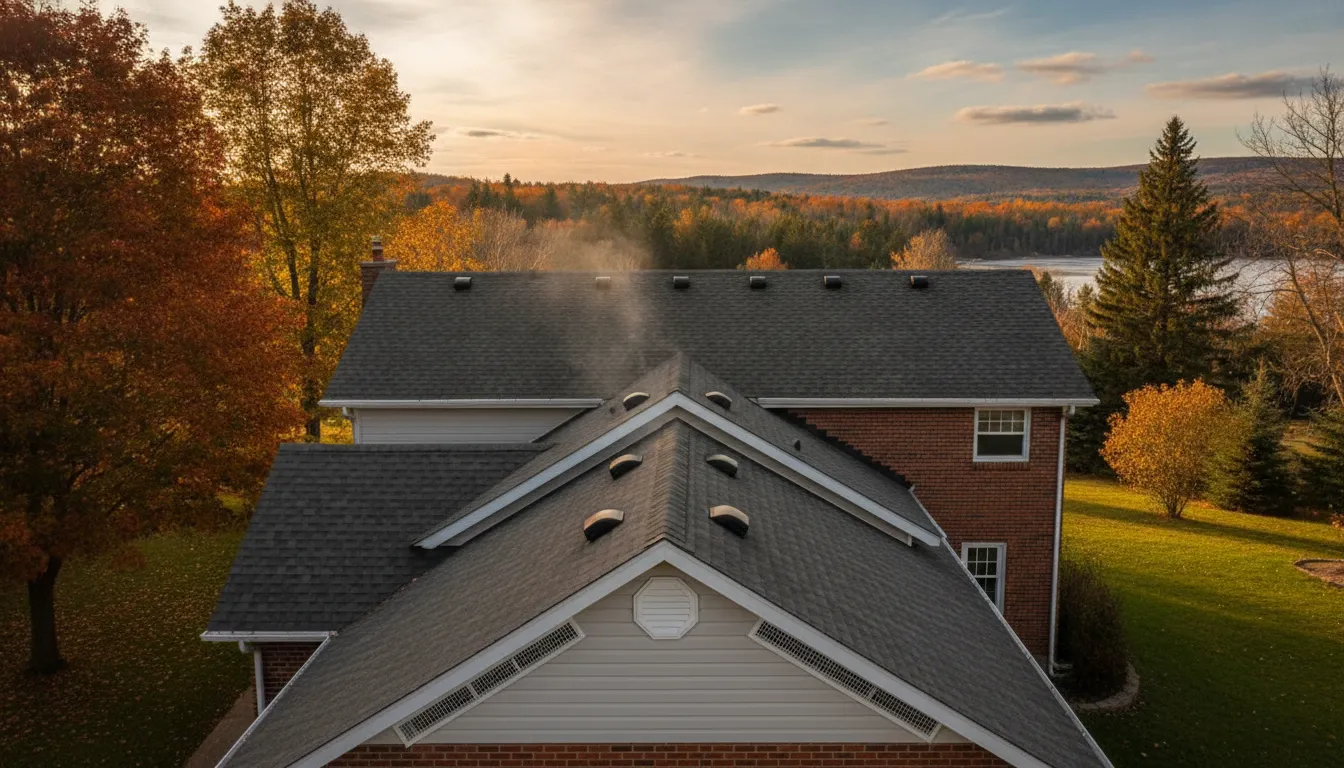
What is attic ventilation and why does it matter for my roof?
Attic ventilation is the designed movement of air through the attic—intake vents low at the eaves and exhaust vents high on the roof or ridge—to control heat and moisture; proper ventilation reduces ice dams, limits moisture damage, slows shingle aging, and helps attic insulation work as intended.
Basic components: intake and exhaust
A balanced system has intake vents (soffit or eave vents) that bring cool outdoor air into the attic and exhaust vents (ridge, roof vents, or gable vents) that let warm, moist air escape. Without both, air can stagnate or create pressure that pushes moisture into framing and insulation.
How ventilation reduces moisture problems
Warm, humid indoor air leaks into the attic in winter and condenses on cold surfaces if it can't escape. Proper ventilation lowers attic humidity and surface temperatures, reducing rot, mold risk, and corrosion of metal components.
How ventilation slows shingle aging
In summer, poor ventilation traps heat under shingles, increasing roof deck temperature and accelerating asphalt degradation. Allowing heat to vent prevents thermal stress and can extend the effective life of many roofing materials.
Why balanced systems matter in Toronto's climate
Toronto summers are warm, winters are cold with freeze–thaw cycles and ice dam risk. A balanced intake/exhaust system sized for your attic reduces ice dams in winter and heat buildup in summer—both common causes of premature roof repairs in the GTA and nearby Mississauga and Markham neighborhoods.
Step-by-Step: Attic Ventilation: The Hidden Key to a Long-Lasting Roof
This is a practical homeowner workflow to evaluate, document, and correct attic ventilation issues. Always verify local permit or contractor requirements in Toronto and surrounding areas before major changes.
- 1
1. Inspect the attic and roof from the inside
Start in the attic on a dry day: look for condensation, stained rafters, mold, compressed insulation, and evidence of airflow near soffits and the ridge. Take clear photos and notes of locations and severity to compare later.
- 2
2. Measure existing ventilation and insulation
Calculate total net free vent area (NFVA) by adding intake and exhaust vent numbers; many guidelines use a ratio based on attic square footage (for example, common practice recommends 1/300 or 1/150 when certain conditions apply). Also record insulation type, depth, and any compressed or missing areas.
- 3
3. Identify airflow blockages and leakage points
Check for blocked soffits (insulation or plywood), closed baffles, or vents covered during renovations. Seal obvious attic bypasses—recessed lights, gaps around chimneys, and dropped ceilings—with appropriate fire-rated caulk or foam in coordination with local code guidance.
- 4
4. Plan ventilation upgrades and materials
Decide whether to add soffit vents, ridge vents, turbine vents, or power ventilators based on roof geometry and attic layout. Use materials rated for your roof type—continuous ridge vent works well on long ridgelines while box vents might be needed for complex roofs—and avoid mixing incompatible systems that short-circuit airflow.
- 5
5. Get a contractor estimate and check local rules
Request written scope and estimates from licensed roofers or attic specialists in Toronto, asking for details on vent types, NFVA provided, and any insulation work. Confirm whether the work needs a permit from the City of Toronto or will affect your insurance policy coverage; practices vary, so verify locally.
- 6
6. Implement, verify, and maintain
After installation, recheck attic temperature and moisture levels in different seasons and inspect vent clearances annually. Keep soffit vents free of debris, maintain attic insulation, and schedule periodic professional inspections—especially after heavy snow, ice events, or roof work.
Mistakes to Avoid
Attic ventilation can be simple, but some common missteps either leave the problem unsolved or make it worse. Avoid quick fixes that ignore balance, and choose proven materials and practices suited to Toronto's climate.
Installing exhaust without sufficient intake
Adding a ridge vent or powered exhaust without opening or restoring soffit intake causes negative pressure that pulls conditioned air and moisture through ceilings. Always pair new exhaust capacity with matching intake NFVA so airflow remains balanced.
Blocking soffits during insulation upgrades
When adding insulation, homeowners or contractors sometimes cover soffit channels, eliminating intake airflow. Use baffles (vent chutes) to preserve a clear air path from soffit to ridge and keep insulation from collapsing into the vent area.
Relying on powered vents as a primary fix
Power attic fans can lower attic temperature but may also create negative pressure and draw humid house air into the attic through bypasses, worsening condensation. Reserve powered ventilation for specific, assessed cases and ensure tight air-sealing first.
Ignoring roof geometry and attic partitioning
Complex roofs, cathedral ceilings, or separated attic spaces need tailored solutions—continuous ridge venting might not reach isolated compartments. Have a professional map airflow paths so vents are placed where air actually moves.
What Affects Your Outcome
Several site-specific and administrative factors change how ventilation improvements perform and how quickly you see results.
House design and roof geometry
Steep roofs, multiple valleys, dormers, or cathedral ceilings alter airflow patterns and may require specialized vent placement or multiple vent types.
Existing insulation and air sealing
If attic bypasses and compressed insulation remain, ventilation upgrades will be less effective; sealing and proper insulation distribution are often preconditions to success.
Local climate and seasonal cycles
Toronto's freeze–thaw winters and humid summers influence ice dam risk and ventilation needs; performance can vary seasonally and should be judged across at least a winter and summer.
Quality of documentation and inspection
Clear before/after photos and measurements help contractors and insurers understand the problem and track improvement, speeding approval and reducing disputes.
Contractor skill and product choice
Experienced roofers choose compatible vents and follow best practices (baffles, NFVA calculations, sealing). Poor workmanship or mismatched products can short-circuit airflow and waste money.
Municipal rules and insurance practices
City of Toronto permit expectations and insurer requirements for roof work or structural changes can affect timeline and costs; always confirm with your local building office and insurer before major work.
Frequently Asked Questions
How much ventilation does my attic need?
Ventilation needs are tied to attic square footage and whether you have a vapor barrier. A common practice uses a ratio of net free vent area (NFVA) to attic area—many apply 1/300 or 1/150 when certain conditions exist—but you should calculate NFVA based on your attic size and existing vent types or consult a local roofer for an accurate measurement.
Can I install vents myself or should I hire a pro?
Simple tasks like clearing soffit vents or installing baffles can be DIY if you are comfortable in attics and follow safety rules, but cutting roof or ridge vents, correcting airflow balance, or dealing with insulation and code compliance is best left to experienced contractors who know Toronto permit and roofing details.
Will venting stop ice dams on my Toronto roof?
Proper ventilation reduces heat transfer to the roof deck and lowers the risk of ice dams, but it's one part of a solution that also includes adequate attic insulation and air sealing. In severe cases, ice dam prevention may also require targeted fixes such as improved flashing or heated roof edge solutions—verify options and costs with a contractor and check with your insurer about allowable remedies.
Are powered attic fans a good idea?
Powered fans can reduce attic temperature but may create negative pressure that pulls moist indoor air into the attic through leaks, increasing condensation risk. They may be appropriate only after air sealing and when selected by a professional who will ensure intake capacity and controls are correct.
Will better ventilation lower my energy bills?
Good ventilation helps reduce attic heat in summer, which can reduce cooling load, and prevents moisture problems that degrade insulation effectiveness. It’s not a silver-bullet energy saver—air sealing and proper insulation levels typically deliver larger, more reliable savings.
Do I need a permit to change vents or insulation in Toronto?
Small repairs often don’t need a permit, but larger changes—altering roof structure, replacing significant roof area, or changing insulation to meet code—may trigger permits. City of Toronto and local building officials set rules and they can vary; confirm with the City of Toronto building department and consult your insurance policy before doing major work.
Book a free attic ventilation inspection for Toronto homes
We’ll assess soffits, vents, insulation, and provide a clear, written plan—no pressure, just practical options tailored to your house.
Get a Free Quote