
Metal vs Asphalt Roofing for Ontario Homes: An Honest Comparison
Straightforward pros, cons and what matters for Toronto-area homes so you can choose with confidence.
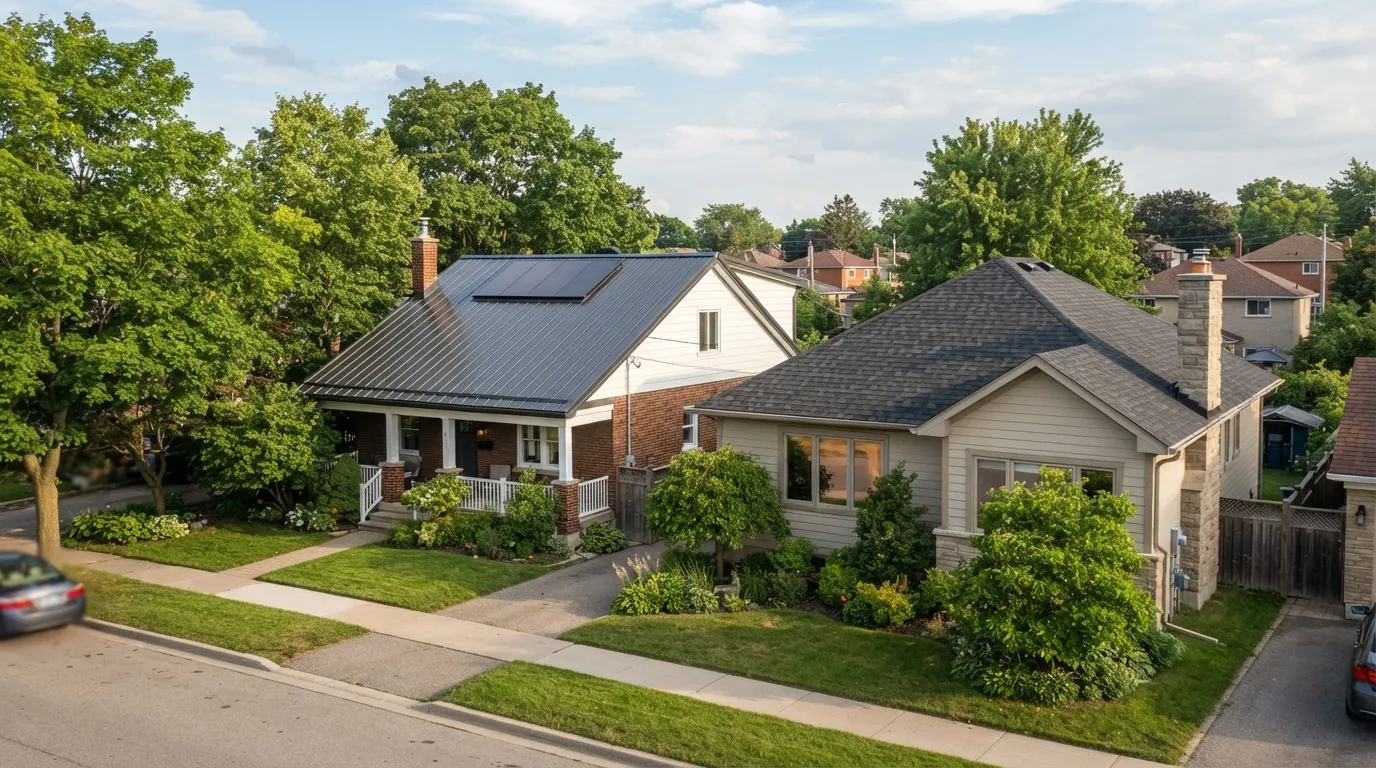
Which is better for Ontario homes — metal or asphalt roofing?
There’s no one-size-fits-all answer: metal typically lasts longer, resists snow and ice better, and costs more up front; asphalt is cheaper up front, easier to install, and often simpler for repairs — choose based on budget, roof geometry, and long-term plans.
What we mean by 'metal' and 'asphalt'
In residential roofing, 'metal' usually means steel (galvanized or coated), aluminum, or standing-seam panels and metal shingles; 'asphalt' covers 3‑tab and architectural (laminate) fiberglass-based shingles. Materials behave differently in weight, thermal movement, and attachment methods.
Primary performance differences
Metal roofs commonly last 40–70 years with proper details and can shed snow and ice well on steeper slopes; architectural asphalt shingles commonly last 15–30 years. Metal handles freeze/thaw cycles and wind uplift differently than asphalt, so fastening and underlayment choices matter.
Cost considerations
Upfront installed cost for asphalt is generally lower; metal is higher up front but can reduce lifetime costs. Local labour rates in Toronto, nearby Mississauga or Markham, and access (steep roof, complex valleys) will affect final pricing — verify quotes locally.
Step-by-Step: Metal vs Asphalt Roofing for Ontario Homes: An Honest Comparison
Use this process to evaluate, decide, and complete a roof replacement or major repair in Toronto or surrounding Ontario municipalities. Adapt the steps to your insurer and municipal permit office requirements.
- 1
Inspect roof and assemble facts
Start with a thorough inspection: age, layer count, flashing condition, ventilation, decking rot, and fastener condition. Photograph damage from the street and safely from the property; note attic signs like staining or sagging.
- 2
Define priorities and budget
Decide if you prioritize lowest upfront cost, lowest lifetime cost, noise control, or curb appeal. Factor in long-term ownership plans — if you expect to stay 20+ years, a metal roof’s longer life may outweigh higher initial expense.
- 3
Get multiple contractor quotes
Ask for itemized written estimates showing materials, underlayment type, ventilation work, ice-and-water shield locations, flashing details, and disposal fees. Confirm the contractor’s Ontario business address or Toronto presence, references, and insurance; verify permit handling procedures.
- 4
Confirm permits, bylaws and insurance expectations
Contact your local building department (for Toronto or the specific municipality) to confirm permit needs and any heritage or neighbourhood controls. If the work involves an insurance claim, notify your insurer promptly and follow their claim process while keeping copies of all paperwork.
- 5
Schedule work and prepare site
Agree on start/end dates, staging placement, and protection for landscaping and driveways; expect noisy demolition days for asphalt and different handling for large metal panels. Confirm cleanup and disposal plans; Toronto-area crews often use roll-off bins and tarp protection.
- 6
Final inspection and documentation
Walk the finished roof with the contractor to confirm flashing, fasteners, and details like ridge vents or drip edges. Keep final invoices, material receipts, and photos for warranty claims, resale, and any future insurance conversations.
Mistakes to Avoid
Choosing the wrong material, overlooking ventilation or fastening details, or skipping permit checks can lead to costly repairs and voided warranties. Below are the common missteps Ontario homeowners make — and how to avoid them.
Buying solely on upfront price
Low initial cost can hide short service life, poor underlayment, or insufficient ventilation. Compare full-system costs (underlayment, flashing, ventilation, tear-off or overlay) and estimate replacement cycles to evaluate lifetime value.
Ignoring ventilation and attic health
A great roof material can fail early if the attic lacks balanced intake and exhaust ventilation. Ensure the contractor assesses soffit vents, ridge vents, and insulation; correcting ventilation reduces ice-damming risk in Toronto winters.
Accepting sloppy flashing or fastener work
Flashing around chimneys, valleys, and eaves determines water tightness. For metal roofs, improper fastener patterns or missing neoprene washers cause leaks; for asphalt, improperly sealed valley treatments or cut shingle edges cause failures. Insist on visible detail photos and a clear warranty on workmanship.
Skipping local permit and insurer checks
Permit requirements and insurance claim processes vary across Ontario and within Toronto neighbourhoods; failing to get permits can complicate resale or insurance outcomes. Always verify with your municipal building office and insurer before work begins.
What Affects Your Outcome
These factors change which roof type is best and how smoothly the project goes.
Roof slope and geometry
Steep, simple rooflines shed snow more easily and suit metal panels; low-slope roofs limit metal choices and favor properly rated asphalt or specialty systems.
Ontario climate and microclimate
Toronto’s hot summers and freeze-thaw winters stress coatings and seams; properties near Lake Ontario can have different snow/ice patterns than homes inland, affecting ice‑and‑water shield requirements.
Existing roof condition and layers
Multiple asphalt layers generally require tear-off before installing new material; metal often requires attaching to clean deck, so hidden rot leads to extra costs.
Quality of underlayment and details
High-temperature-rated underlayment, continuous ice-and-water shield in valleys and eaves, and proper flashing choices determine long-term performance more than shingle brand alone.
Contractor expertise and warranty
Experience with the chosen material — especially standing seam installation or specialty metal trims — affects leak risk. Compare labour warranties and manufacturer warranties; ensure clarity on who services future issues.
Permit, inspection and insurance processes
Municipal permit timelines, required inspections, and how insurers handle upgrades or depreciation affect schedule and out-of-pocket cost — verify local building and insurance practices early.
Frequently Asked Questions
Is a metal roof noisier than asphalt during rain or hail?
Properly installed metal roofing with solid sheathing, underlayment, and attic insulation is not notably louder than asphalt. Noise concerns are often overblown; discuss insulation and underlayment layers with your contractor if sound is a priority.
Will a metal roof increase my insurance premium in Ontario?
Insurance treatment varies by company; some insurers offer discounts for impact-resistant materials, while others price by replacement cost and fire rating. Tell your insurer the exact material details and get written confirmation — practices differ across Toronto, nearby Mississauga and Durham Region.
Can metal be installed over existing asphalt shingles?
Some metal roofing profiles can be installed over a single layer of asphalt if the deck is sound, but many municipal codes and best practices still recommend tear-off to inspect decking. Check local permit rules and the metal manufacturer’s recommendations before deciding.
How does ice-damming risk compare between metal and asphalt?
Metal sheds snow more readily which can reduce ice-dam formation on steep slopes, but if edges freeze where snow melts and refreezes, issues can still occur. Proper attic insulation, ventilation, and continuous ice-and-water shield at eaves are key regardless of material.
What about resale value in Toronto — does metal add more value?
A high-quality, well-documented metal roof can be attractive to buyers and may reduce future maintenance concerns, but resale value depends on neighbourhood expectations and overall home condition. Keep receipts, warranties, and installation details — Toronto buyers and appraisers value verifiable documentation.
How long should I expect warranties to last?
Manufacturer warranties for metal often range from 20–40 years on paint/coating, while asphalt shingle warranties commonly run 20–30 years for premium products. Labour and workmanship warranties are usually shorter; get both in writing and confirm who handles service calls.
Free roof assessment for Toronto-area homes
Schedule a no-obligation inspection to compare metal and asphalt options for your home; we’ll document condition, ventilation, and likely costs.
Get a Free Quote